
[ Planning guide ]
Conference speaker photography
A guide for conference organizers, program teams and association planners planning photos of keynotes, panels and breakout speakers.

Updated November 12, 2026
Conference speaker photography should cover each speaker on stage from the front and the side, the speaker with the room and the slides, panels as a group and each panelist speaking, the audience reacting, and the Q&A. Send your photographer the agenda with rooms and times, the speakers who matter most, the stage lighting plan from your AV team and any photo restrictions, and agree before the event how speakers will receive their photos and who may use them.
[ What to weigh ]Decision criteria
What the speaker photos are for
Speaker thank-yous, next year's call for speakers and sponsor pitch, the event recap, press, the speakers' own LinkedIn posts. Rank the uses, so the photographer knows which sessions matter most when two run at once.
The agenda, rooms and priorities
Send the final agenda with rooms and times, mark the sessions and speakers that must be covered, and send changes on the day. With parallel breakouts, one photographer can't be everywhere: decide which rooms get coverage and for how long.
Stage lighting
Ask your AV team how the stage will be lit. Even, bright light on the speaker's face makes every photo better; a speaker in a single spotlight against a dark room, or lit only by the screen, is hard to photograph well.
Where the photographer can stand
The best angles are usually the front of the room, the side aisles and the back. Agree where the photographer can move during sessions, and whether the camera or flash would distract in a small room.
Panels and moderators
A panel needs the group photo and each panelist speaking. Send the panel order and seating, and the moderator's name, so the photos are captioned right.
Speakers who opt out or have restrictions
Some speakers can't be photographed, or can't have certain slides photographed. Collect this when speakers register, tell the photographer before the session, and agree how it's flagged in the room. Your organization and its legal or communications team are responsible for deciding and handling any required notices, releases or permissions.
Getting photos to speakers
If speakers need photos for timely posts, agree how and when those photos will be delivered, whether they're sorted by session or by speaker, and what speakers may use them for.
[ Compared ]Speaker photos, session by session
| Session | Shots to ask for | What it's used for |
|---|---|---|
| Opening keynote | Speaker close and wide, the full room, the stage set and slides | Recap opener, next year's promotion, sponsor pitch |
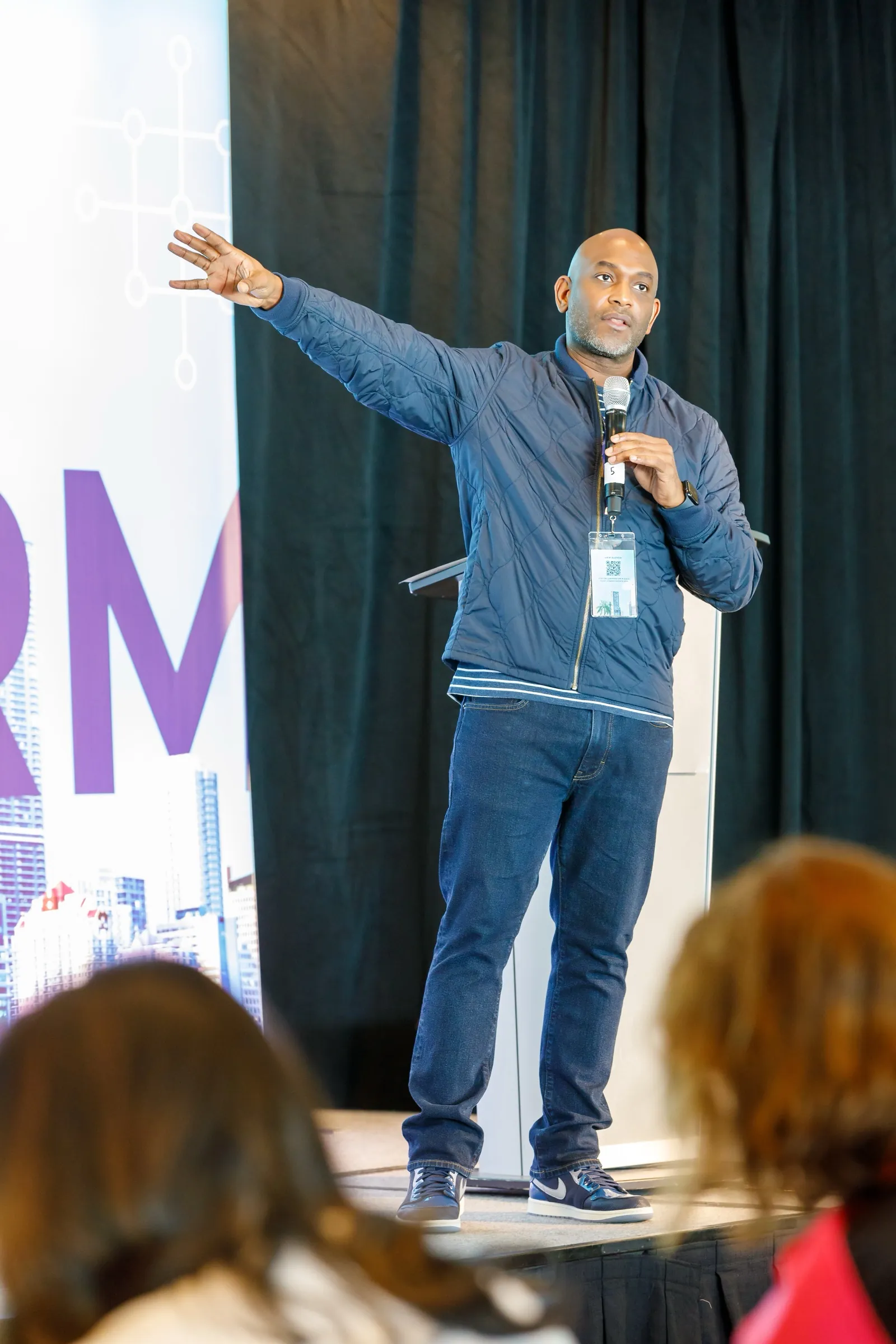
| Keynotes and featured talks | Speaker from the front and the side, expressive moments, speaker with the screen | Speaker thank-yous, speaker pages, press |
| Panels | The panel together, each panelist speaking, the moderator, the panel with the audience | Recap, panelists' own posts, next year's call for speakers |
| Breakouts and workshops | The speaker with the slide, the room working, a few faces in the audience | Session pages, member news, education-program recaps |
| Q&A | Attendees asking questions, the speaker listening and answering | Recap, proof of engagement for sponsors |
| Audience | Reactions, laughter, note-taking, full rows | Recap, next year's registration |
| Speaker portraits | A quick portrait off stage or at a headshot station | Program, event app, next year's speaker pages |
Four photos every session needs

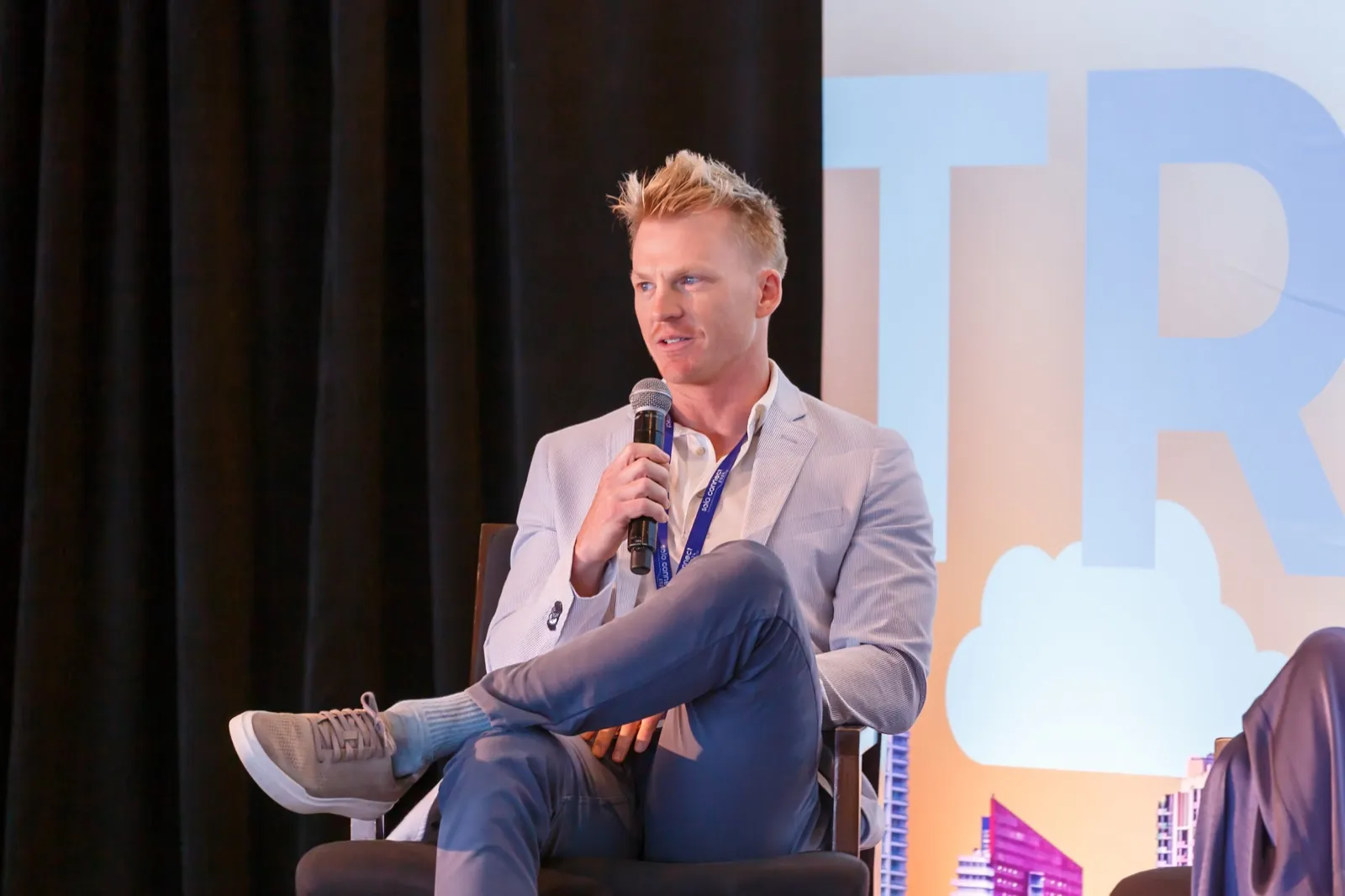
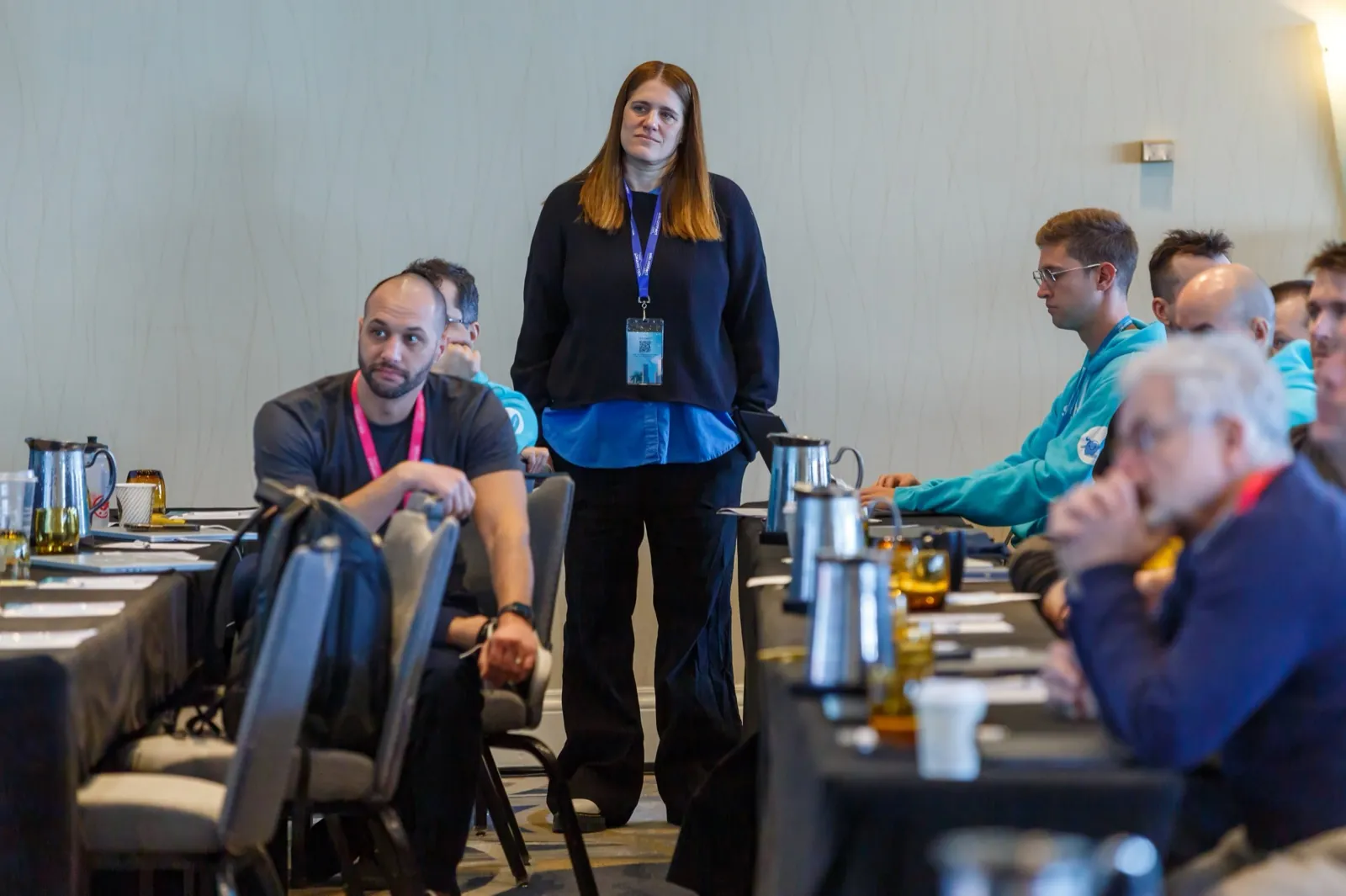
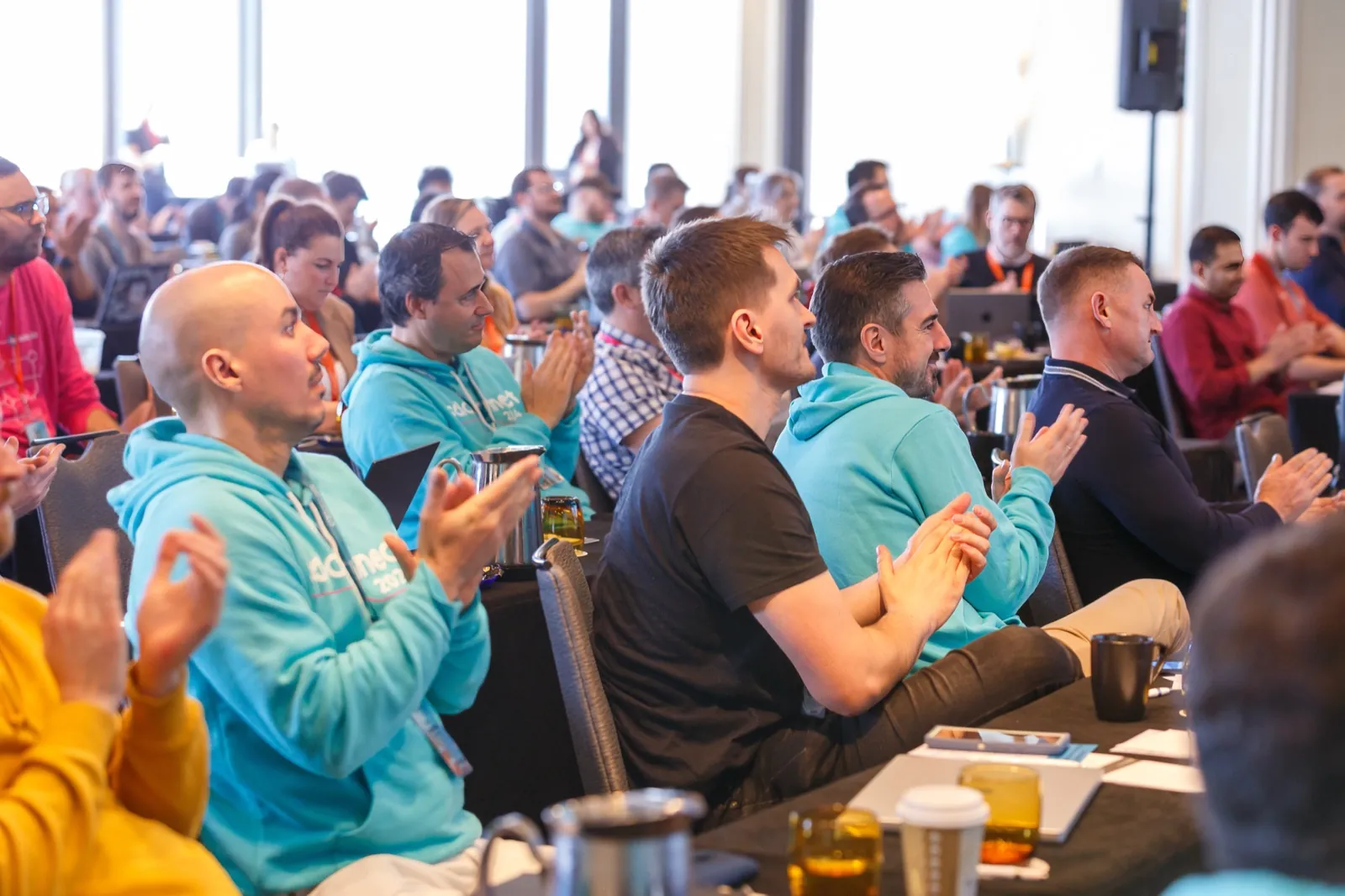
Good conference speaker photography shows who was on stage and that people listened. Ask for both.
[ Brief ]What to send the photographer
- The agenda. Rooms, times and the sessions that must be covered, and the final version on the day.
- The speakers who matter most. Keynotes, sponsors' speakers, award presenters, with a photo of each.
- The panel details. Order, seating and the moderator, so captions are right.
- The restrictions. Speakers or slides that can't be photographed, and how that's flagged in the room.
- A contact on site. Someone from the program or AV team who knows when sessions start and change.
[ Timing ]Plan around the agenda
- The opening keynote. The fullest room of the event: the speaker, the stage and the audience together.
- Parallel sessions. Decide which breakouts get coverage, and set a coverage window for each priority room based on the shots you need.
- Panels. Stay long enough for each panelist to speak and for the Q&A.
- Schedule changes. Tell the photographer when a session moves or a speaker changes.
[ Light ]Help the stage photograph well
Most speaker photos are decided by the light. Ask your AV team for even, bright light on the speaker's face, not a single hard spotlight or only the glow of the screen.
A little light on the lectern and the panel chairs helps, and so does a speaker who steps out from behind the lectern. Leave a clear line from the side aisles to the stage, and agree where the photographer can stand without blocking the audience or the cameras.
[ Speakers ]Before speakers go on stage
- Tell speakers they'll be photographed. Include it in the speaker briefing, with how they'll receive their photos.
- Collect opt-outs early. Ask at registration whether a speaker or any slides can't be photographed.
- Think about portraits. A quick portrait off stage, or a headshot station, gives every speaker a matching photo for the program and next year's promotion.
[ Nuances ]Common gaps
- A dark stage. The speaker in a single spotlight, the room in darkness, and every photo a silhouette.
- The wrong breakout. The photographer covered a room nobody asked for while a priority speaker spoke next door.
- No panel order. Photos of a panel nobody can caption.
- Only the stage. No audience photos, so the recap can't show that the room was full.
- Speakers waiting for photos. They wanted to post that week, and nobody agreed how they'd receive them.
[ How we work ]From your agenda to a coverage plan
Send us your agenda, rooms and priority speakers, and we turn them into a coverage plan: the keynotes, panels and breakouts we cover, when, and what we need from you before the event. Our photographers have covered conferences and corporate events since 2015. Photos are delivered within 24 hours after each event day ends, by secure download link, organized by day and part of the program, with headshots, group photos and video in their own folders, and we can send selected photos during the event, on a best-effort basis. We're insured and send a certificate of insurance (COI) for your venue or company before the event.See conference photography for how coverage works, or request a quote with your agenda attached.

Questions planners ask
Do we need photos of every speaker?
Should the photographer use flash during talks?
How do we get speaker photos for the program and the app?
Can speakers use the photos?
When will we receive the photos?
Should we record the talks on video too?
Is there a shot list template we can use?
Tell us about your event
The date, venue and hours are enough to start. We reply with a quote and any questions we have.
Request a quote